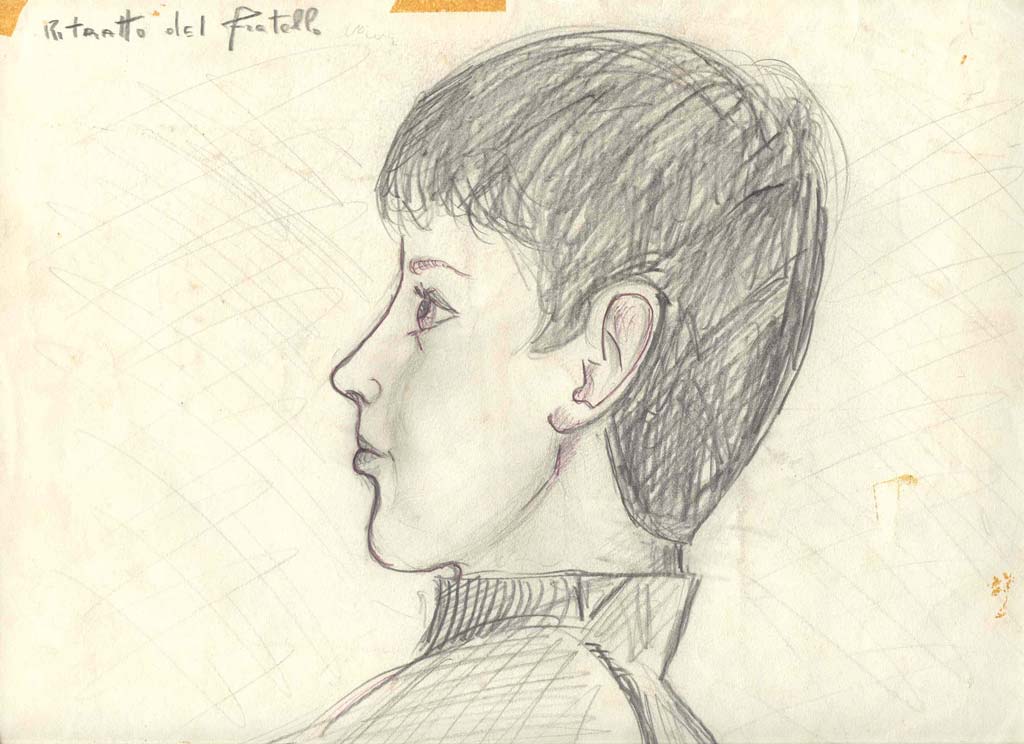
 My brother
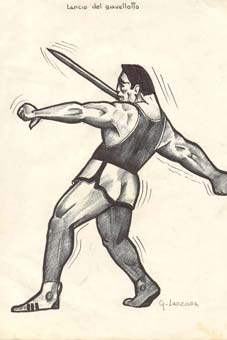
My brother
Technique: Pensil on thin cardboard
Dimensions: 13.4x9.45 inc (32x24 cm)
Progressive number of the 2010 catalog 237
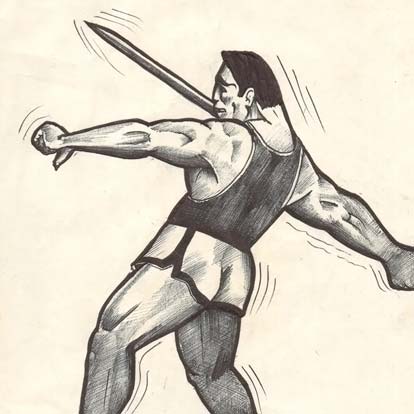
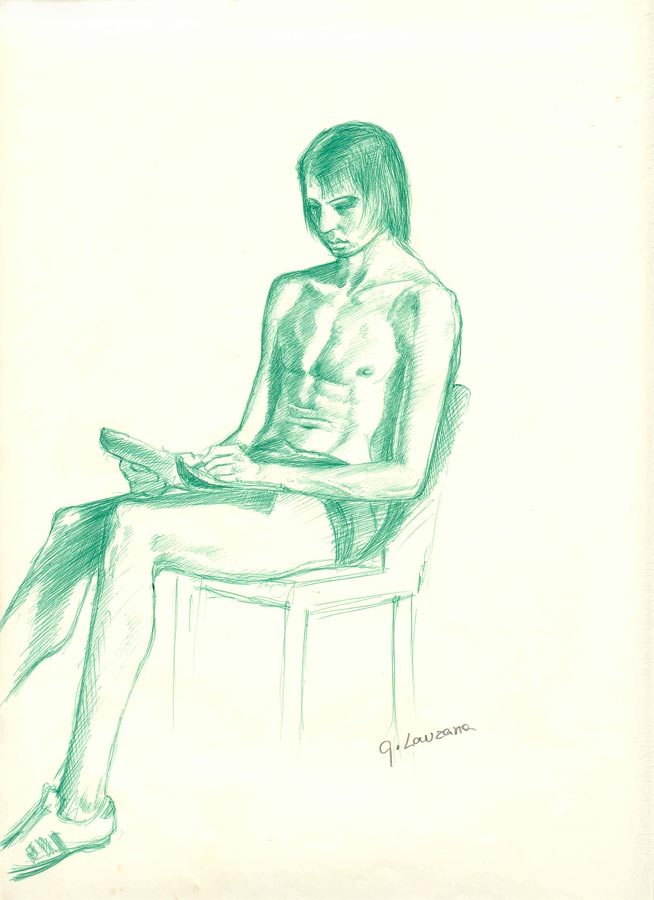 Self-portrait
Self-portrait
Technique: Ball-point pen on thin cardboard
Dimensions: 9.45x16.6 inc (24x32 cm)
Progressive number of the 2010 catalog 115
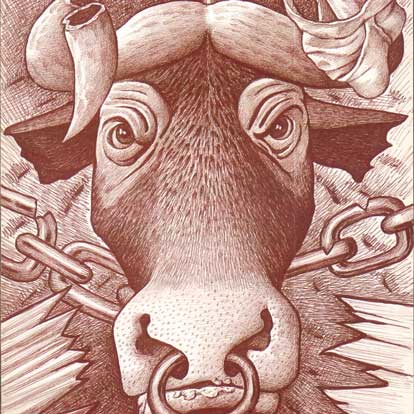
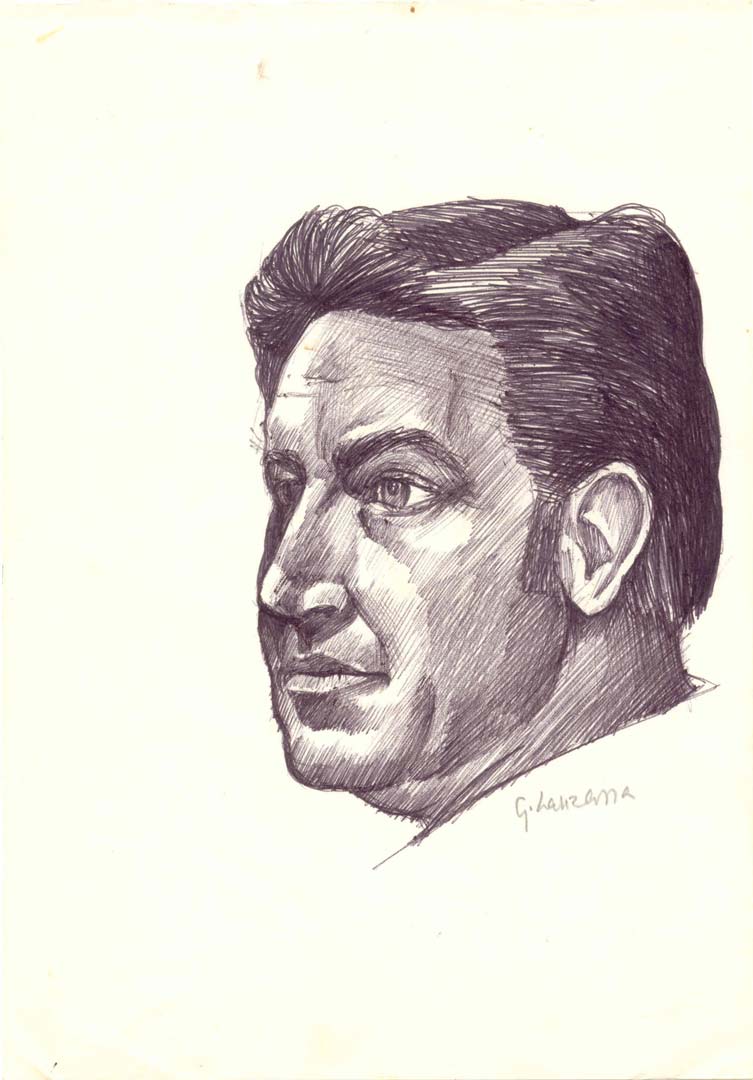 Dad
DadDad
Technique: Ball-point pen on paper
Dimensions: 6.7x9.45 inc (17x24 cm
Progressive number of the 2010 catalog 109
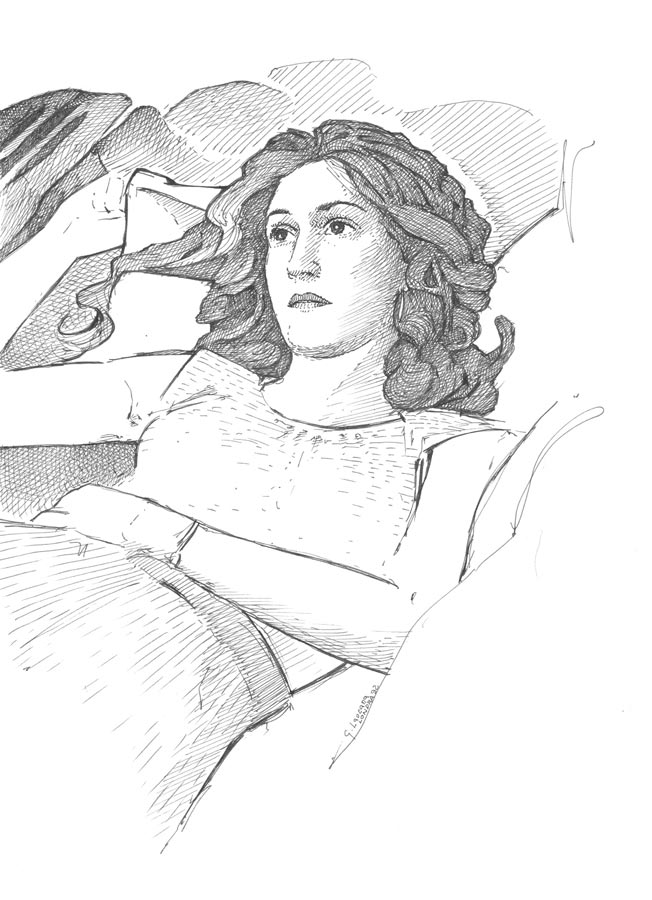 London
London
Year: 1992
Technique: Indian ink on Fabriano paper
Dimensions: 9.45x16.6 inc (24x33 cm)
Progressive number of the 2010 catalog 18
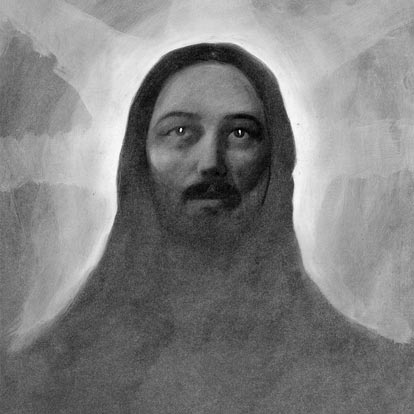
 Mom
MomMom
Year: 1972
Technique: Pensil on Giotto paper
Dimensions: 9.45x16.6 inc (24x32 cm)
Progressive number of the 2010 catalog 104

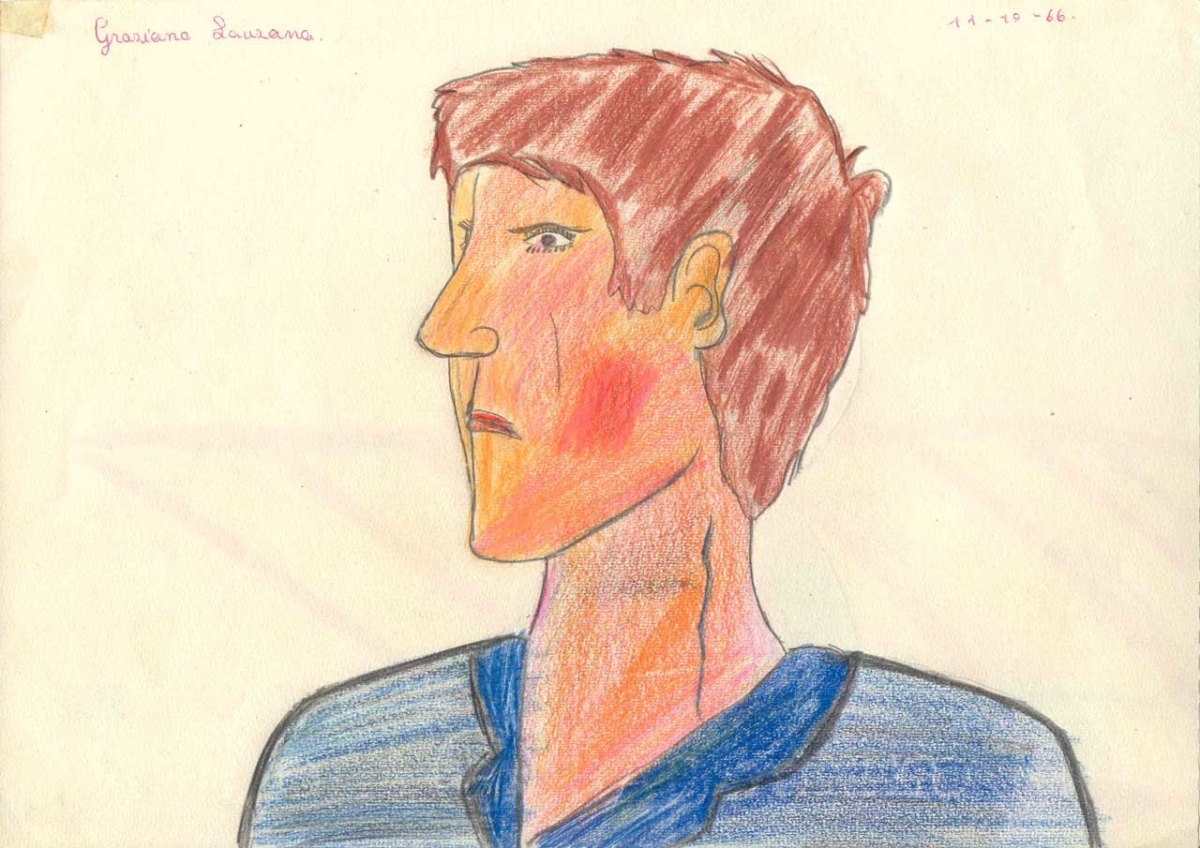 My brother
My brother
Year: 1966
Technique: Crayon on thin cardboard
Dimensions: 11.4x8.3 inc (29x21 cm)
Progressive number of the 2010 catalog 251

 As I will be when I grow up
As I will be when I grow up
Year: 1966
Technique: Tempera on thin cardboard
Dimensions: 9.84x13.4 inc (25x34 cm)
Progressive number of the 2010 catalog 240
 My brother
My brother
Technique: Pensil on thin cardboard
Dimensions: 13.4x9.45 inc (32x24 cm)
Progressive number of the 2010 catalog 237
Self-portraitSelf-portrait
Technique: Ball-point pen on thin cardboard
Dimensions: 9.45x16.6 inc (24x32 cm)
Progressive number of the 2010 catalog 115
DadDad
Technique: Ball-point pen on paper
Dimensions: 6.7x9.45 inc (17x24 cm
Progressive number of the 2010 catalog 109
LondonLondon
Year: 1992
Technique: Indian ink on Fabriano paper
Dimensions: 9.45x16.6 inc (24x33 cm)
Progressive number of the 2010 catalog 18
MomMom
Year: 1972
Technique: Pensil on Giotto paper
Dimensions: 9.45x16.6 inc (24x32 cm)
Progressive number of the 2010 catalog 104
My brotherMy brother
Year: 1966
Technique: Crayon on thin cardboard
Dimensions: 11.4x8.3 inc (29x21 cm)
Progressive number of the 2010 catalog 251
As I will be when I grow upAs I will be when I grow up
Year: 1966
Technique: Tempera on thin cardboard
Dimensions: 9.84x13.4 inc (25x34 cm)
Progressive number of the 2010 catalog 240
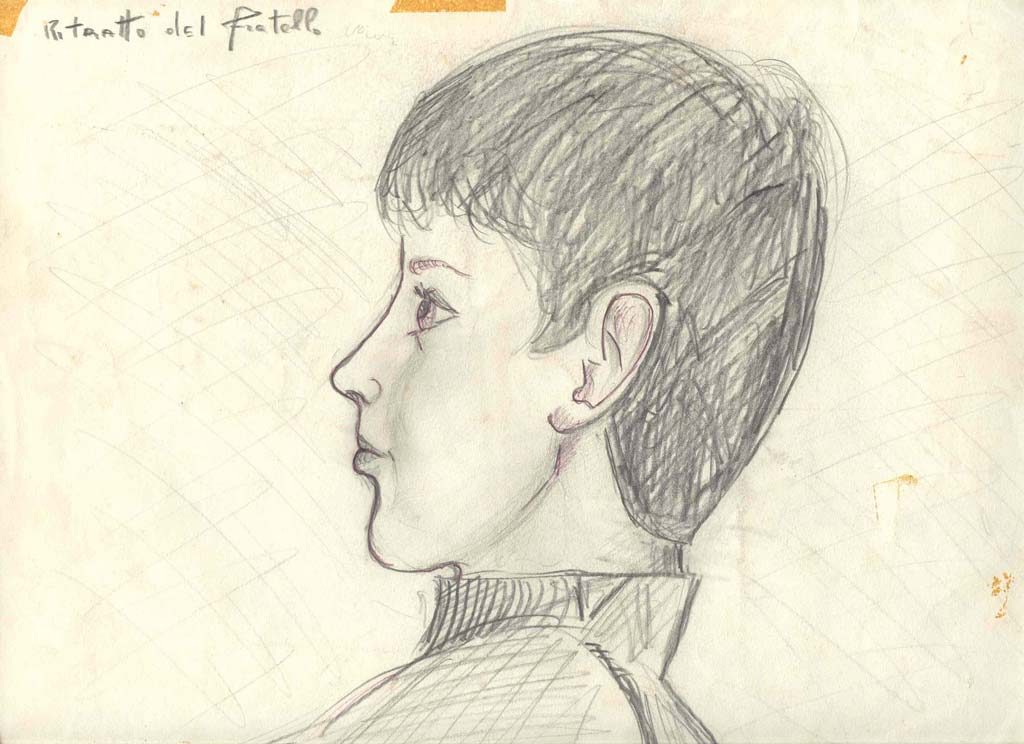 My brother
Technique: Pensil on thin cardboard
Dimensions: 13.4x9.45 inc (32x24 cm)
Progressive number of the 2010 catalog 237
Self-portraitTechnique: Ball-point pen on thin cardboard
Dimensions: 9.45x16.6 inc (24x32 cm)
Progressive number of the 2010 catalog 115
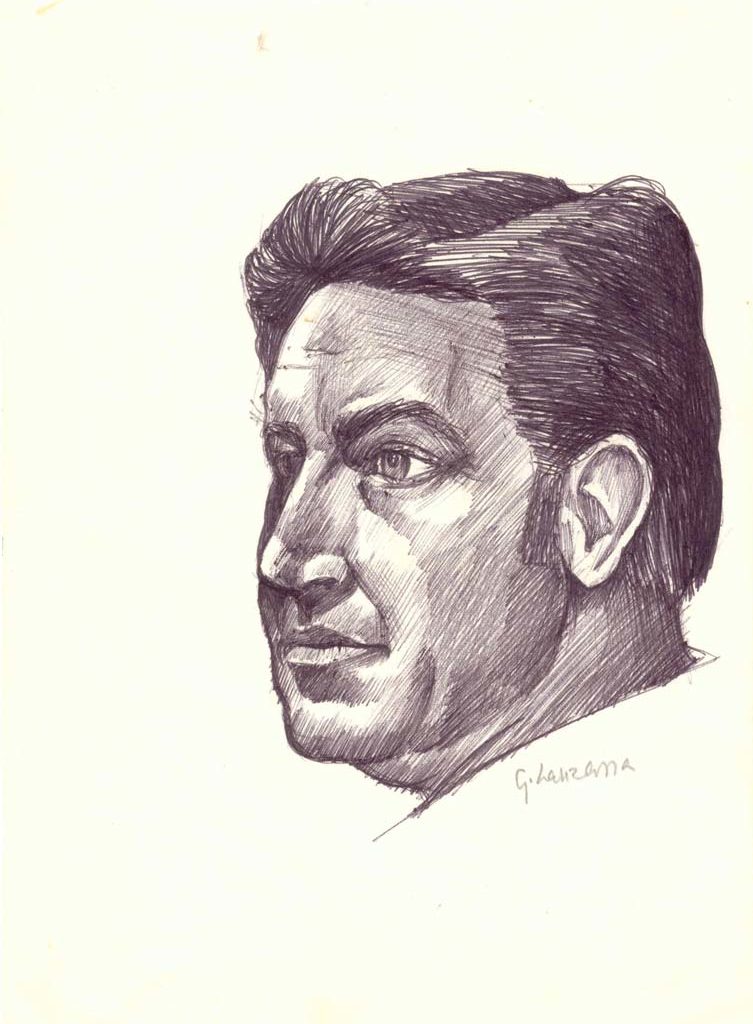 Dad
DadTechnique: Ball-point pen on paper
Dimensions: 6.7x9.45 inc (17x24 cm
Progressive number of the 2010 catalog 109
LondonYear: 1992
Technique: Indian ink on Fabriano paper
Dimensions: 9.45x16.6 inc (24x33 cm)
Progressive number of the 2010 catalog 18
MomYear: 1972
Technique: Pensil on Giotto paper
Dimensions: 9.45x16.6 inc (24x32 cm)
Progressive number of the 2010 catalog 104
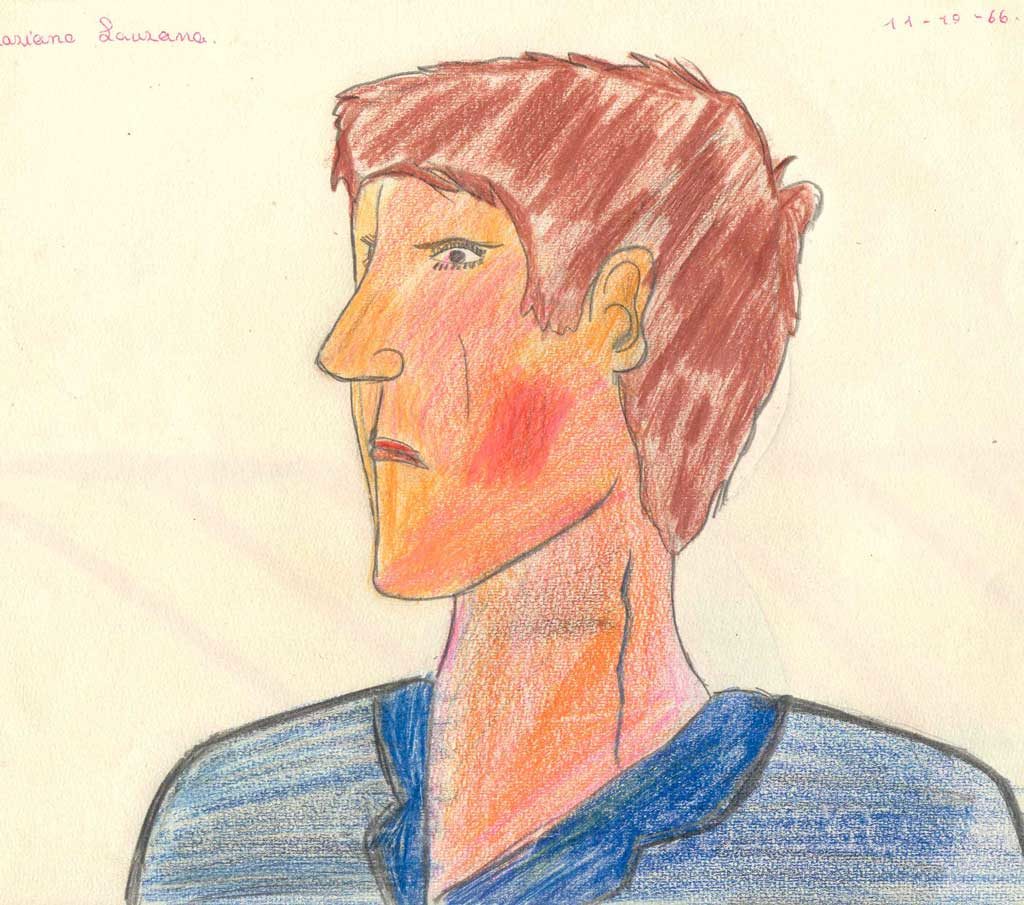 My brother
Year: 1966
Technique: Crayon on thin cardboard
Dimensions: 11.4x8.3 inc (29x21 cm)
Progressive number of the 2010 catalog 251
As I will be when I grow upYear: 1966
Technique: Tempera on thin cardboard
Dimensions: 9.84x13.4 inc (25x34 cm)
Progressive number of the 2010 catalog 240